IndianBreakfast and brunchMeatless
Kerala Appam
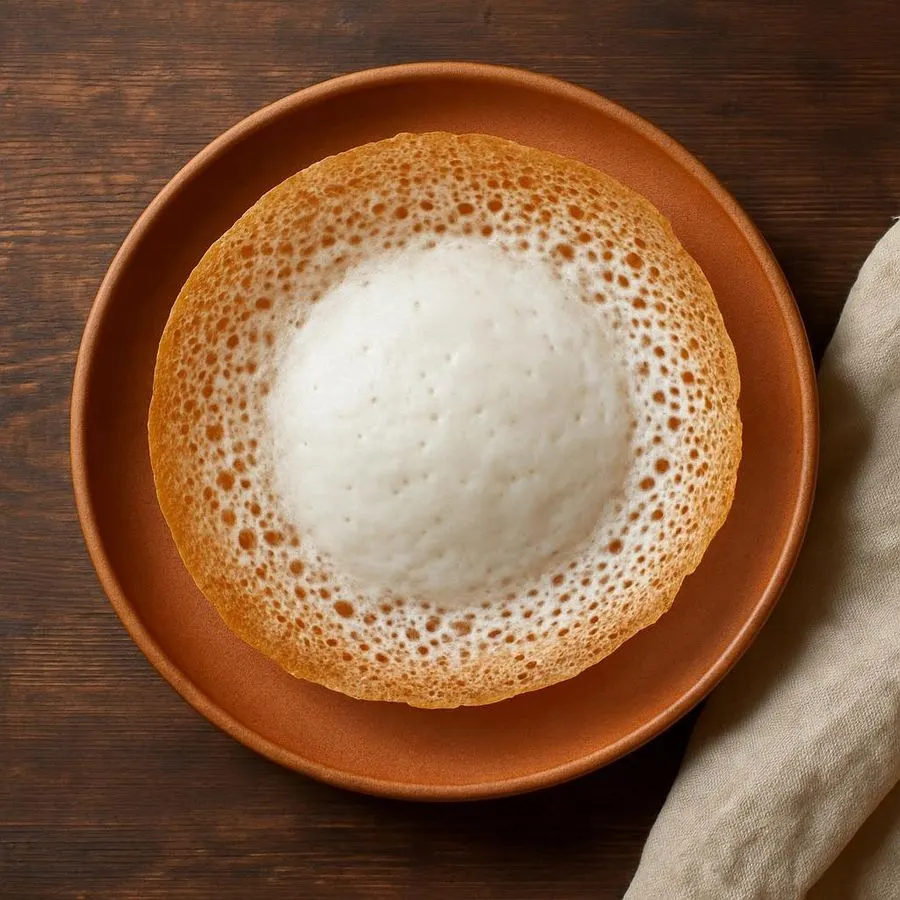
Soft, lacy rice pancakes with crisp edges and a gentle coconut tang, made for breakfast.
- Total
- 35 min
- Serves
- 4
- Level
- Medium
 By Priya @tadka.tales · Cookt Kitchen · 21 October 2026
 Ingredients
Quantities for 4. Tick things off as you go.
 Method
Rinse and soak the rice
Rinse the raw rice under cold running water, then cover it with plenty of fresh cold water and soak at room temperature for 4 hours, until swollen; drain well.
Blend the rice
Blend the drained rice, cooked rice, coconut milk and 250 ml of the measured water for 2 to 3 minutes at high speed, until as smooth as possible.
Activate the yeast
Stir the yeast and sugar into the remaining 100 ml water at 35 to 40°C and leave at room temperature for 5 to 10 minutes, until foamy.
Season the batter
Stir the yeast mixture and salt into the rice batter for 1 minute at room temperature, until evenly combined.
Ferment the batter
Cover and ferment at 20 to 24°C for 8 to 12 hours, until bubbly, slightly risen and lightly tangy; check from 6 hours in a warm room and stop before it collapses.
Check the batter consistency
Stir gently at room temperature and add water 1 tablespoon at a time, up to 100 ml, until the batter pours freely in a thin stream; rest for 5 minutes.
Heat the appam pan
Heat a rounded appam pan over medium heat for 2 minutes, then wipe the cooking surface lightly with oil; lower the heat to medium-low before adding batter.
Pour and swirl the batter
Pour 100 to 120 ml batter into the rounded pan over medium-low heat, lift it and swirl once around until a thin layer climbs the sides and a thicker pool remains in the centre.
Cook one appam
Cover and cook over medium-low heat for 2 to 3 minutes, until the centre is set and no longer wet-looking and the rim is golden and crisp; do not flip.
Cook the remaining appam
Lift out the appam with a thin spatula and keep warm; repeat over medium-low heat, lightly oiling the pan if needed, until all batter is used, making about 8 to 10 appam.
Serve
Serve the appam hot, immediately after cooking, while the centres are soft and the edges crisp.

Tips
- For grinding in a standard blender, process in batches and combine the batter before adding the yeast mixture.
- Use a rounded appam pan for the traditional shape. A small non-stick frying pan can cook the batter, but will make less lacy appam; do not expect the batter to climb flat sides.
- The yield is about 8 to 10 appam, depending on pan size and batter portion. Keep cooked appam covered while finishing the batch. Fermentation is temperature-dependent, so use the bubbles, slight rise and gentle tang as cues.
Swaps
- Use rapeseed or sunflower oil to grease the pan.
Storing
Cool leftover appam, cover and refrigerate for up to 2 days. Reheat covered in a pan over low heat for 2 to 3 minutes, until hot throughout.
Nutrition per serving
390 kcal · protein 7 g · carbs 68 g · fat 11 g · fibre 3 g. This is an estimate, not a lab measurement.
Allergens
Read the label on every ingredient you buy. We can't account for how a product was made or packed.
How this page was made
Written by the Cookt team, following our recipe standards. AI tools help us draft, check and illustrate recipes. No star ratings until enough people have rated this recipe in Cookt.